Marketing today is more advanced than ever. Businesses have access to better tools, detailed data, and multiple platforms to reach people. Many campaigns are well-designed and carefully planned. Still, even good marketing can fall short.
This can be confusing, especially for beginners. If everything looks right, why do the results not match expectations?
The answer is simple. Good marketing is not just about doing things well. It is about doing what works for your audience, at the right time, in the right way. Even small gaps can affect the outcome.
Let us break this down in a simple way.
Not Understanding the Audience Clearly
One of the most common reasons for failure is a weak understanding of the audience. Many businesses assume they know what people want. But assumptions often lead to wrong messaging.
For example, a brand may talk about product features, while the audience only cares about how it solves their problem. This disconnect makes the campaign less effective.
Good marketing starts with listening. You need to understand what your audience needs, what they expect, and how they make decisions.
The Message is Not Clear
Even a well-designed campaign can fail if the message is confusing. If people do not understand what you are offering, they will not take the next step.
Sometimes brands try to include too many ideas in one campaign. This makes the message unclear. In other cases, the message is too generic and does not stand out.
A strong message focuses on one idea. It clearly explains why it matters to the audience.
Choosing the Wrong Platform
Every platform works differently. What works on one platform may not work on another.
For example, short and engaging content works better on social media, while detailed content works better on websites or emails. If you use the wrong format in the wrong place, the campaign may not perform well.
It is important to choose platforms based on where your audience spends time and how they consume content.
Poor Timing
Timing can make a big difference. Even a good campaign can fail if it is launched at the wrong time.
This could be due to market trends, seasonal changes, or even the stage of the customer journey. For example, trying to sell to someone who is still exploring options may not work.
Understanding when your audience is ready to act is important.
Lack of Consistency
Marketing is not a one-time activity. It requires regular effort.
Some businesses run one good campaign and then stop. Others keep changing their message too often. This creates confusion and reduces trust.
Consistency helps people remember your brand. It builds familiarity over time.
Ignoring Data and Feedback
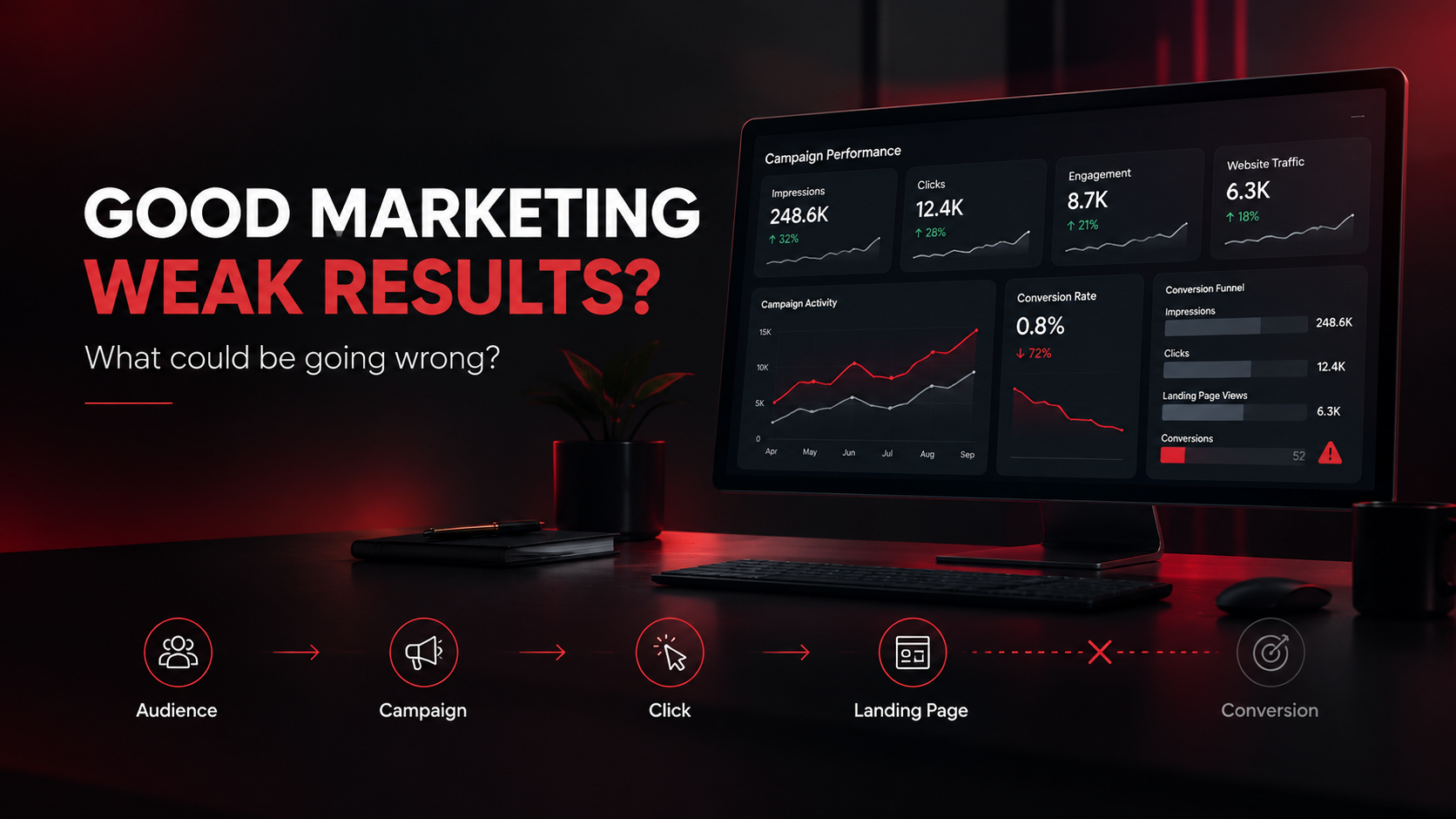
Today, marketing gives you access to useful data. This includes clicks, views, engagement, and conversions. Ignoring this data can lead to repeated mistakes.
For example, if people are clicking on your ad but not taking action, there may be an issue with your landing page.
Feedback from customers is also valuable. Comments, reviews, and messages can tell you what is working and what is not.
Too Much Focus on Creativity
Creativity is important, but it should not be the only focus.
Some campaigns look impressive but fail to achieve results because they do not connect with the audience or support a clear goal.
Marketing should always have a purpose. Every creative idea should support that purpose.
Weak Customer Experience After The Click
Getting attention is only the first step. What happens next is just as important.
If your website is slow, difficult to navigate, or does not match the campaign message, people may leave.
A smooth and clear experience helps turn interest into action.
Not Building Trust
People do not make decisions quickly unless they trust the brand.
If your communication feels unclear, inconsistent, or too sales-focused, people may hesitate.
Trust is built over time through clear messaging, honest communication, and consistent value.
Expecting Quick Results
Many beginners expect marketing to deliver instant results. This is not always realistic.
Some goals, like building awareness or trust, take time. Even conversions may require multiple interactions.
Marketing works best when seen as a long-term effort.
How To Make Your Marketing Work Better
Start by understanding your audience. Take time to learn what they need and how they think.
Keep your message simple. Focus on one clear idea. Choose platforms based on where your audience is active.
Be consistent. Show up regularly with a clear message.
Use data to guide your decisions. Improve based on real insights.
Make sure the full journey, from first click to final action, feels smooth and connected.
How Webfolks Supports Better Marketing Outcomes
At Webfolks, marketing is approached as a connected system, not isolated tasks.
The focus is on understanding your audience, building clear communication, and creating a journey that leads to action. From strategy to execution, every step is aligned with your business goals.
Instead of chasing quick wins, the approach is built on consistency, improvement, and measurable progress. This helps businesses move from uncertain results to predictable growth.