Developing a mobile app can be a powerful step for businesses looking to improve customer engagement, streamline operations, and create new revenue opportunities. However, many businesses rush into app development without understanding the groundwork required for success.
An app is not just about writing code and launching it on app stores. It requires a clear purpose, user-focused design, the right technology, and a long-term growth strategy.
Many app failures happen before development even begins. Businesses often overlook important decisions during the planning stage, leading to wasted time, increased costs, and an app that fails to meet user expectations.
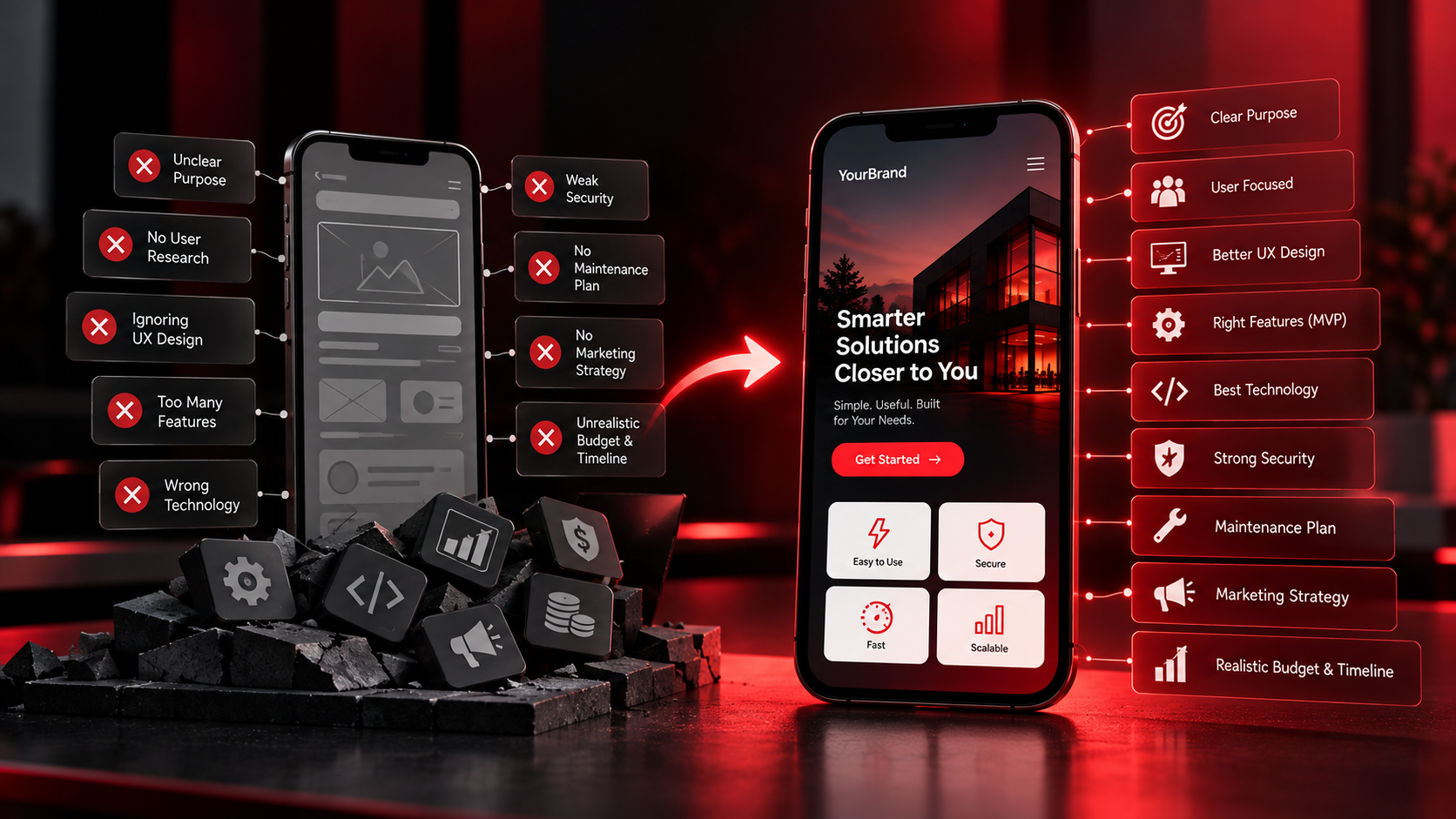
Here are some common mistakes businesses make before developing an app and how to avoid them.
1. Building an App Without a Clear Purpose
One of the biggest mistakes businesses make is developing an app simply because competitors have one.
Before starting development, businesses need to answer an important question:
What problem will this app solve?
An app should have a clear purpose, whether it is improving customer experience, simplifying purchases, automating business processes, or providing better access to services.
Without a defined goal, businesses may end up creating unnecessary features that confuse users instead of adding value.
A successful app starts with understanding the business objective and how the app supports it.
2. Not Understanding the Target Users
An app is built for users, not just for the business.
Many companies start development based on what they want instead of what their customers actually need. This can result in poor user experience and low adoption rates.
Before development begins, businesses should research:
- Who will use the app?
- What problems do users face?
- What features will make their experience easier?
- What devices and platforms do they prefer?
Understanding user behaviour helps create an app that feels useful and intuitive.
3. Ignoring User Experience (UX) Design
A visually attractive app is not always a successful app.
Users expect apps to be simple, fast, and easy to navigate. Poor navigation, complicated processes, and confusing layouts can make users leave the app quickly.
Businesses often make the mistake of treating design as just an aesthetic element. In reality, UX design influences how users interact with the entire app.
A well-planned UX strategy focuses on:
- Simple navigation
- Faster task completion
- Clear user journeys
- Mobile-friendly interactions
Investing in UX before development can improve user satisfaction and retention.
4. Trying to Add Too Many Features Initially
Many businesses want their first app version to include every possible feature. While this may seem like a good idea, it can make development more complex and expensive.
A feature-heavy app can also create a confusing experience for users.
Instead of building everything at once, businesses should focus on a Minimum Viable Product (MVP). An MVP includes the most important features needed to solve the user’s primary problem.
Once the app gains user feedback, businesses can gradually introduce additional features based on actual needs.
5. Choosing Technology Without Proper Research
Selecting the right technology is a crucial decision before app development begins.
Some businesses choose technologies based only on cost or short-term benefits. However, the wrong technology choice can create problems with scalability, performance, security, and future updates.
Businesses should consider:
- App performance requirements
- Target platforms (Android, iOS, or both)
- Future expansion plans
- Security needs
- Maintenance requirements
A proper technology strategy ensures that the app can grow with the business.
6. Underestimating the Importance of Security
Security is often considered only after development starts, but it should be planned from the beginning.
Mobile apps may handle sensitive customer information, payment details, or business data. Weak security practices can damage customer trust and create serious business risks.
Before development, businesses should consider:
- Data protection strategies
- Secure authentication methods
- Regular security updates
- Safe payment integrations
Building security into the app from the start is much more effective than fixing vulnerabilities later.
7. Not Planning for App Maintenance
Launching an app is not the final step. It is the beginning of continuous improvement.
Many businesses focus only on development costs and forget about future maintenance.
Apps require regular updates to:
- Fix technical issues
- Improve performance
- Add new features
- Maintain compatibility with operating system updates
Without proper maintenance, even a well-built app can become outdated over time.
8. Ignoring Marketing Before Launch
A common misconception is that users will automatically download an app once it is published.
In reality, app success depends heavily on visibility and promotion.
Businesses should create a marketing plan before launch, including:
- Building awareness before release
- Creating launch campaigns
- Encouraging early users
- Collecting reviews and feedback
A great app without a marketing strategy may struggle to reach its audience.
9. Not Setting a Realistic Budget and Timeline
App development requires careful planning of resources, costs, and timelines.
Some businesses underestimate the time required for research, design, development, testing, and improvements.
A realistic plan should include:
- Development costs
- Design expenses
- Testing phases
- Maintenance budget
- Future upgrades
Proper planning helps avoid unexpected expenses and delays.
Conclusion
A successful app is built long before the first line of code is written. The decisions businesses make during the planning stage have a direct impact on the final product.
Avoiding common mistakes like unclear objectives, poor user research, weak UX planning, and lack of maintenance strategy can help businesses create apps that deliver real value.
Whether you are building a customer-facing app or an internal business solution, choosing the right development approach is essential.
With proper planning, user-focused design, and the right technology partner, businesses can transform their app idea into a digital solution that supports long-term growth.
Need help developing a business app? WebFolks helps businesses create scalable, user-friendly mobile applications tailored to their goals.