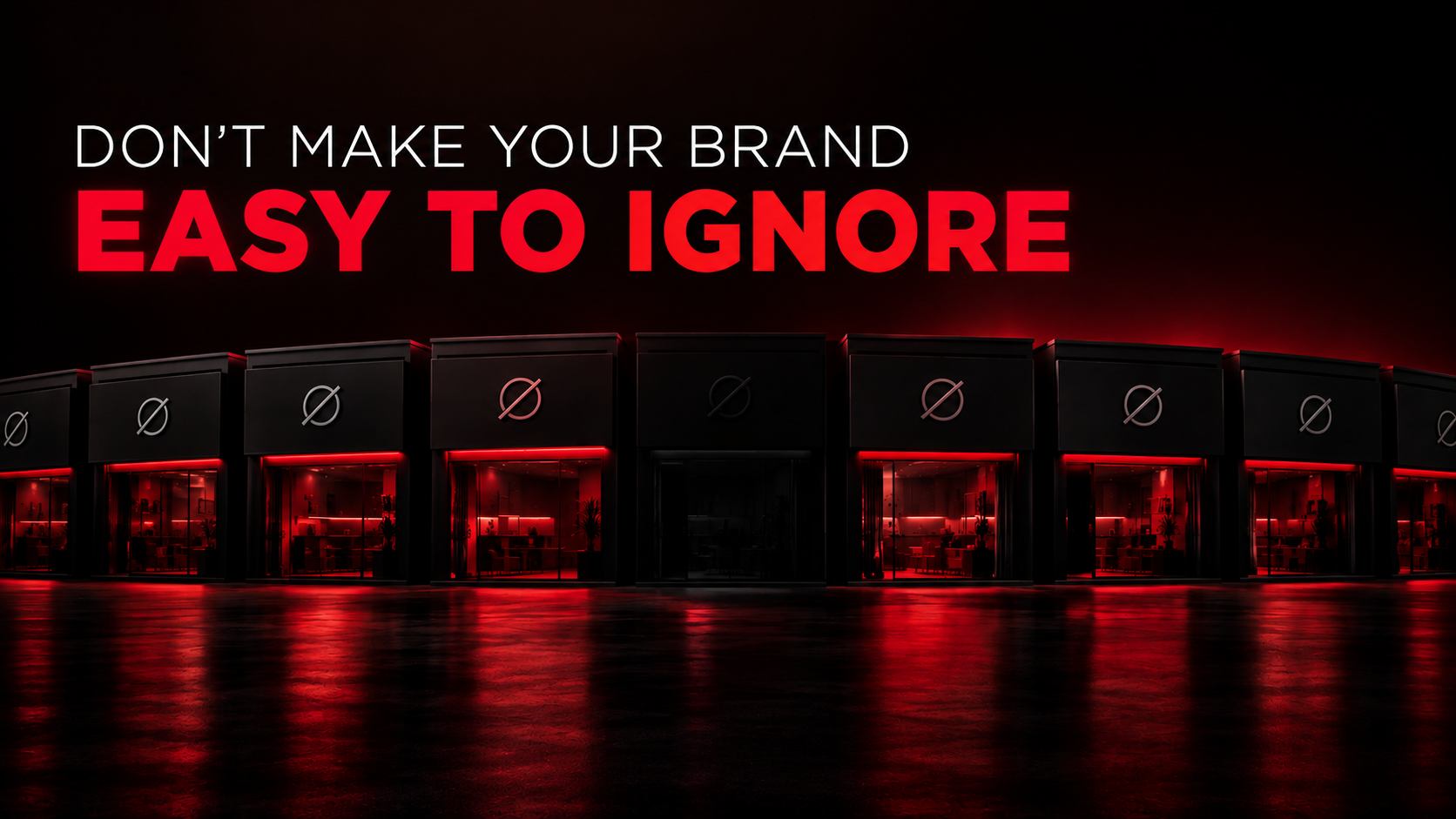
Playing it safe with your brand often feels like the smart move. You follow industry trends, keep your messaging neutral, and avoid anything that might seem too bold. On the surface, everything looks right.
But in reality, safe branding rarely delivers strong results.
In a crowded digital space, brands are not competing to look acceptable. They are competing to be noticed, understood, and remembered. When your brand plays it safe, it blends in. And when it blends in, it struggles to grow.
What it Really Means to Play it Safe
A safe brand is not a bad brand. It is simply one that avoids risk at every level. The design feels familiar, the messaging sounds predictable, and the overall presence does not create a strong impression.
This usually happens when businesses try to appeal to everyone. They soften their message to ensure it does not push anyone away.
The result is a brand that looks professional but lacks identity.
There is nothing wrong with it. But there is also nothing memorable about it.
Why Safe Brands Underperform
The biggest issue with playing it safe is not immediate failure. It is slow, consistent underperformance.
When people come across your brand, they may not find a reason to stay. Even if they do, they may not remember you later. There is no clear hook, no distinct voice, and no strong reason to choose you over others.
This directly affects how your business performs. Engagement remains low, conversions feel inconsistent, and marketing efforts require more effort to deliver results.
Over time, businesses in this position often increase ad spending to compensate. But without a strong brand foundation, even paid efforts struggle to scale efficiently.
The Risk of Being Forgettable
Many businesses avoid bold branding decisions because they fear getting it wrong. They worry about standing out too much or not appealing to a wider audience.
But the greater risk is not being different. It is being forgettable.
Customers are exposed to countless brands every day. If your brand looks and sounds like others, there is no reason for them to remember you. And if they do not remember you, they will not return.
A brand that tries to please everyone usually fails to connect with anyone in a meaningful way.
Clarity is More Important Than Comfort
Strong brands are built on clarity, not comfort.
When your brand is clear, people immediately understand what you do, who it is for, and why it matters. This reduces confusion and builds trust from the first interaction.
On the other hand, safe branding often leads to vague communication. The message feels general, and the value is not clearly expressed.
Even with good design, this lack of clarity creates friction.
Where Most Brands Hold Back
In many cases, the problem is not a lack of effort but a lack of direction.
Brands invest in websites, social media, and campaigns, but the core message remains weak. The tone changes across platforms. The content speaks broadly instead of directly.
This creates a disconnected experience. Users may interact with your brand, but they do not fully understand it.
When that happens, your brand becomes easy to replace.
How Webfolks Helps You Move Beyond Safe
At Webfolks, the focus is not on making your brand look different for the sake of it. The goal is to make your brand work better.
This starts with defining what makes your business distinct. Instead of trying to appeal to everyone, the focus is on building a clear position in the market. This shapes how your brand speaks, looks, and connects.
From there, your website is treated as a conversion tool, not just a digital presence. Every section is structured to guide users toward action, making the experience simple and effective.
Content also plays a key role. Rather than posting for visibility alone, the focus is on creating meaningful communication that builds trust and reinforces your brand identity.
Across all platforms, consistency is maintained. This helps your brand become recognizable, reliable, and easier to remember.
Redefining What “Safe” Should Mean
Playing it safe should not mean blending in. It should mean making decisions that are right for your business and your audience.
That includes being clear in your messaging, focused in your targeting, and intentional in your design.
When these elements come together, your brand does not need to rely on trends or shortcuts. It becomes strong because it is built with purpose.
Conclusion
Playing it safe with your brand may feel comfortable, but it limits your potential.
In a market where attention is limited, brands need more than a polished look. They need clarity, direction, and a strong identity.
A safe brand may avoid mistakes, but it also avoids impact.
At Webfolks, the goal is to help businesses move beyond that stage and build brands that are clear, confident, and built to perform.
Because in the end, the real danger is not standing out. It is being overlooked.