Your website may look stunning, your content may be powerful, and your ads may be running perfectly. But if your technical SEO is broken, your growth silently suffers.
In 2026, search engines are smarter, users are impatient, and competition is intense. A single technical SEO mistake can reduce organic traffic, lower search rankings, and damage user experience.
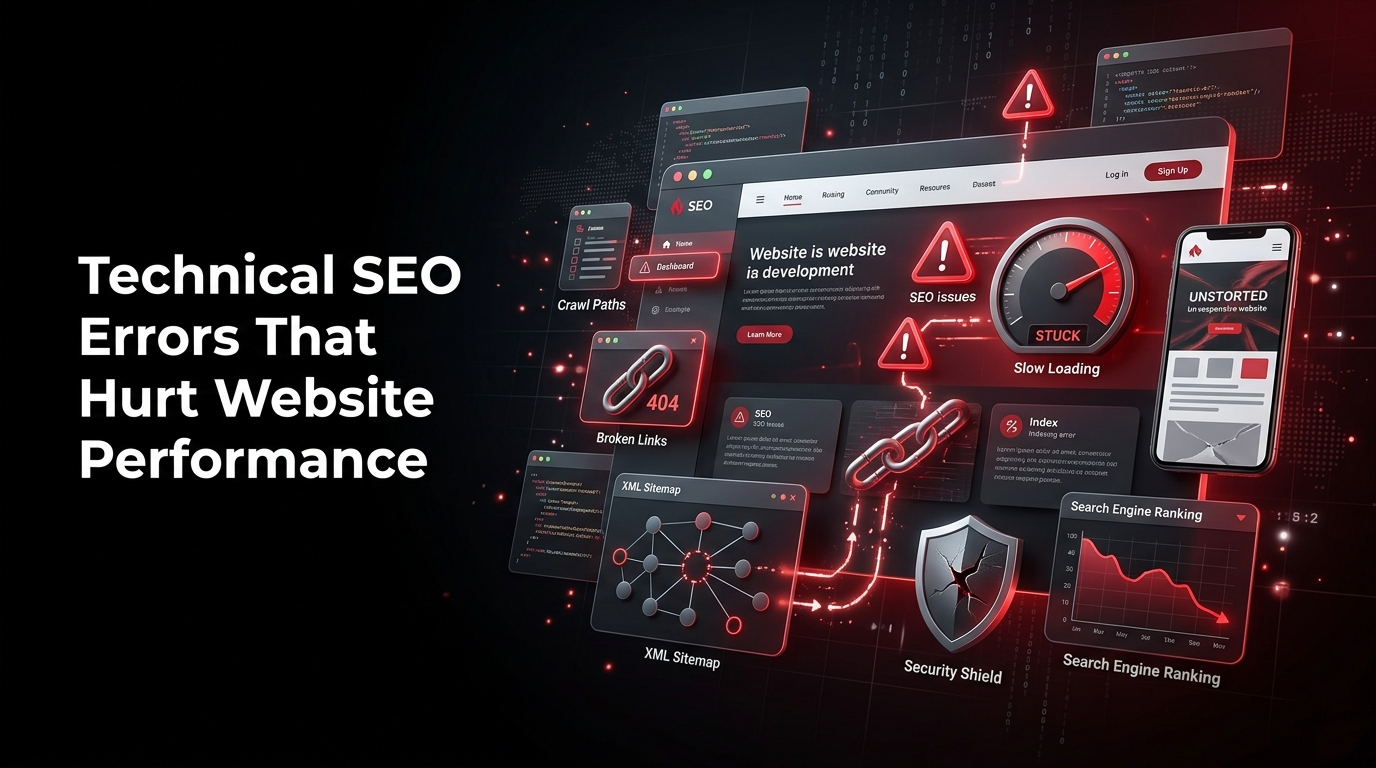
Let’s uncover the most critical technical SEO errors that hurt website performance and how to fix them before they impact your business growth.
1. Slow Website Speed: The Silent Revenue Killer
If your website takes more than three seconds to load, you are already losing visitors.
Search engines like Google prioritize fast-loading websites. Page speed directly affects:
- Search engine rankings
- Bounce rate
- Conversion rate
- User satisfaction
Example:
Imagine a customer searching for “best digital marketing agency in Kerala.” Your website appears in the results but takes five seconds to load. They leave and click a competitor’s link instead. That is a lost opportunity.
Common causes:
- Heavy images
- Unoptimized code
- Too many plugins
- Poor hosting
Speed optimization improves both Core Web Vitals and overall SEO performance.
2. Poor Mobile Optimization
More than 70% of users browse through smartphones, and if your website is not mobile-friendly, your search rankings can decline rapidly. Google follows mobile-first indexing, which means it primarily evaluates the mobile version of your website while determining rankings.
Common technical SEO issues include text that is too small to read, buttons placed too close together, content that extends beyond the screen width, and slow mobile loading speed. These problems negatively affect user experience, increase bounce rates, and reduce engagement. A responsive website is no longer optional; it is essential for strong digital visibility and sustainable online growth.
3. Broken Links and 404 Errors
Broken links damage both user experience and search engine crawling.
When visitors see a 404 error page repeatedly, trust decreases. Search engines also reduce crawl efficiency when encountering dead pages.
Impact of broken links:
- Lower domain authority
- Reduced indexing
- Poor navigation experience
Regular technical audits help detect and fix these issues quickly.
4. Improper URL Structure
URLs should be clean, descriptive, and SEO-friendly.
Bad Example:
www.website.com/page?id=12345
Good Example:
www.website.com/technical-seo-services
Search engines prefer structured URLs because they improve crawlability and relevance. Keyword-rich URLs boost visibility in search engine results pages.
5. Duplicate Content Issues
Duplicate pages often confuse search engines, making it difficult for them to determine which version should be ranked in search results. This issue commonly arises when both HTTP and HTTPS versions of a website remain active, when WWW and non-WWW versions are accessible simultaneously, when product descriptions are repeated across multiple pages, or when different URLs lead to the same content.
Such duplication weakens SEO authority and can dilute ranking potential. Implementing canonical tags helps search engines identify the preferred version of a page, consolidates link equity, and protects your overall search engine visibility.
6. Missing or Incorrect XML Sitemap
An XML sitemap guides search engines to your important pages.
Without it, search engines may miss the following:
- New service pages
- Blog posts
- Landing pages
Submitting a properly structured sitemap in Google Search Console improves crawl efficiency and faster indexing.
7. Poor Internal Linking Structure
Internal linking plays a crucial role in building content authority and helping search engines understand your website hierarchy. When pages are isolated without proper links, crawl depth increases, page authority weakens, and user navigation becomes difficult, ultimately affecting overall SEO performance.
A well-planned internal linking strategy connects relevant pages logically, distributes ranking power effectively across the site, enhances user experience, and significantly improves organic traffic growth.
8. Missing Meta Tags and Structured Data
Meta titles and descriptions directly influence click-through rate.
Without optimized meta tags:
- Your website looks incomplete in search results
- CTR decreases
- Rankings may weaken
Adding schema markup improves rich results such as star ratings, FAQs, and business information.
9. Crawl Errors and Indexing Problems
Sometimes, webpages may exist on your site but fail to appear in search results because they are not indexed properly. This usually happens due to technical issues such as no index tags being mistakenly applied, a blocked robots.txt file preventing search engine crawlers from accessing pages, server errors disrupting crawl activity, or poor site architecture making it difficult for search engines to navigate the website efficiently.
Regularly monitoring indexing reports inside Google Search Console helps identify and resolve these problems, ensuring your important pages are discovered, indexed, and visible in search results.
10. Weak Website Security (No HTTPS)
Security is a ranking factor.
If your website does not use HTTPS:
- Browsers show a “Not Secure” warning
- Customers hesitate to share information
- Search engines reduce trust
An SSL certificate protects data and enhances credibility.
Why Technical SEO Matters More Than Ever
Technical SEO is not just about fixing errors; it is about building a strong digital foundation that supports long-term growth. When your website is fast, secure, mobile-friendly, properly indexed, and structured clearly for search engines, it performs more efficiently across every digital channel.
These improvements lead to higher organic traffic, better search engine rankings, improved user engagement, increased lead generation, and stronger brand credibility. In highly competitive markets, strategic technical optimization becomes your unfair advantage, helping your business stand out and scale consistently.
Real Business Impact of Ignoring Technical SEO
Consider an e-commerce website with excellent products but slow speed and crawl errors. Despite investing in performance marketing, organic growth remains stagnant.
After fixing technical SEO issues:
- Page load time reduced by 40%
- The bounce rate dropped significantly
- Organic traffic increased within months
- The conversion rate improved steadily
Technical SEO transforms website performance from average to exceptional.
From Visibility to Conversions: Building a Website That Truly Performs
If your website is not generating consistent organic leads, the issue may not be your content or ads. It could be hidden technical errors limiting your potential.
At Webfolks, we analyze, diagnose, and optimize every technical layer of your website. From site speed optimization to crawl audits, mobile performance to structured data implementation, we ensure your website is built for search engine success and long-term digital growth.
Do not let invisible errors block visible success.
Connect with Webfolks today and turn your website into a high-performing, search-optimized growth engine.