Marketing today often confuses visibility with value, resulting in brands overwhelming audiences with aggressive messaging, endless promotions, and constant urgency triggers.
However, the strongest brands operate differently, choosing calm authority over noise and strategic positioning over short-term persuasion tactics.
This shift represents a deeper evolution in buyer psychology, where trust and credibility influence decisions more powerfully than loud promotional tactics.
Invisible branding is the framework behind this transformation, enabling brands to attract demand without appearing desperate for attention.
What is Invisible Branding?
Invisible branding is a strategic approach to digital brand positioning that prioritizes authority, clarity, and consistency before initiating any direct selling efforts.
Instead of focusing on aggressive persuasion, it builds an ecosystem where customers perceive expertise, reliability, and long-term value naturally.
This method ensures that by the time a buying decision is considered, the brand already feels credible and trustworthy.
The result is a selling process that feels effortless because the psychological groundwork has already been established.
Why Traditional Selling is Losing Influence
Modern buyers operate with greater awareness, access to comparison tools, and the ability to research multiple competitors within minutes.
Before making decisions, they evaluate reviews, analyze service depth, examine case studies, and validate authority signals across digital channels.
When brands push aggressively during this evaluation phase, resistance increases because buyers interpret pressure as insecurity.
In contrast, brands that communicate expertise calmly reduce friction and increase confidence without explicitly asking for conversion.
Traditional selling tactics were designed for attention scarcity, yet today’s environment is defined by information abundance and skepticism.
In such a landscape, trust becomes the primary differentiator between brands that convert and brands that are ignored.
The Strategic Shift from Persuasion to Positioning
Persuasion attempts to influence behavior directly through urgency, emotional triggers, and repeated calls to action.
Positioning, however, shapes perception so effectively that the buying decision feels rational and self-initiated rather than externally influenced.
When a brand demonstrates deep expertise, structured communication, and consistent value delivery, it becomes a logical choice rather than a persuasive option.
This is the essence of invisible branding, where credibility does the heavy lifting traditionally assigned to sales tactics.
The Foundational Pillars of Invisible Branding
Invisible branding is built on three strategic pillars that collectively shape how a brand is perceived in competitive digital environments.
- Consistency ensures that messaging, tone, visual identity, and digital communication remain aligned across all platforms, creating familiarity that reinforces long-term trust.
- Authority is developed through educational content, industry insights, structured thought leadership, and strategic clarity that signals expertise rather than promotional intent.
- Experience strengthens perception through seamless user journeys, fast-loading websites, intuitive navigation, and subtle credibility indicators that influence decision-making subconsciously.
When these three pillars align strategically, the brand communicates stability and confidence without explicitly promoting its services.
Such perception significantly reduces hesitation during purchasing decisions because clarity replaces uncertainty at every stage of the customer journey.
How Invisible Branding Drives Sustainable Growth
Invisible branding compounds over time because each interaction reinforces authority instead of relying on temporary promotional incentives.
Search engines reward structured expertise, while users reward brands that consistently provide clarity and actionable insights.
As credibility strengthens, referrals increase, retention improves, and conversion cycles shorten due to reduced psychological friction.
Instead of competing on price or aggressive advertising, the brand competes on perception and strategic positioning.
This creates long-term equity that outperforms short-term visibility campaigns.
Final Takeaway
Invisible branding represents the next evolution of trust-based marketing in an environment saturated with aggressive promotional tactics.
It demands structured expertise, consistent communication, seamless experience design, and authority signals that validate credibility across channels.
If traditional selling focuses on pushing attention, invisible branding focuses on attracting confidence through strategic positioning.
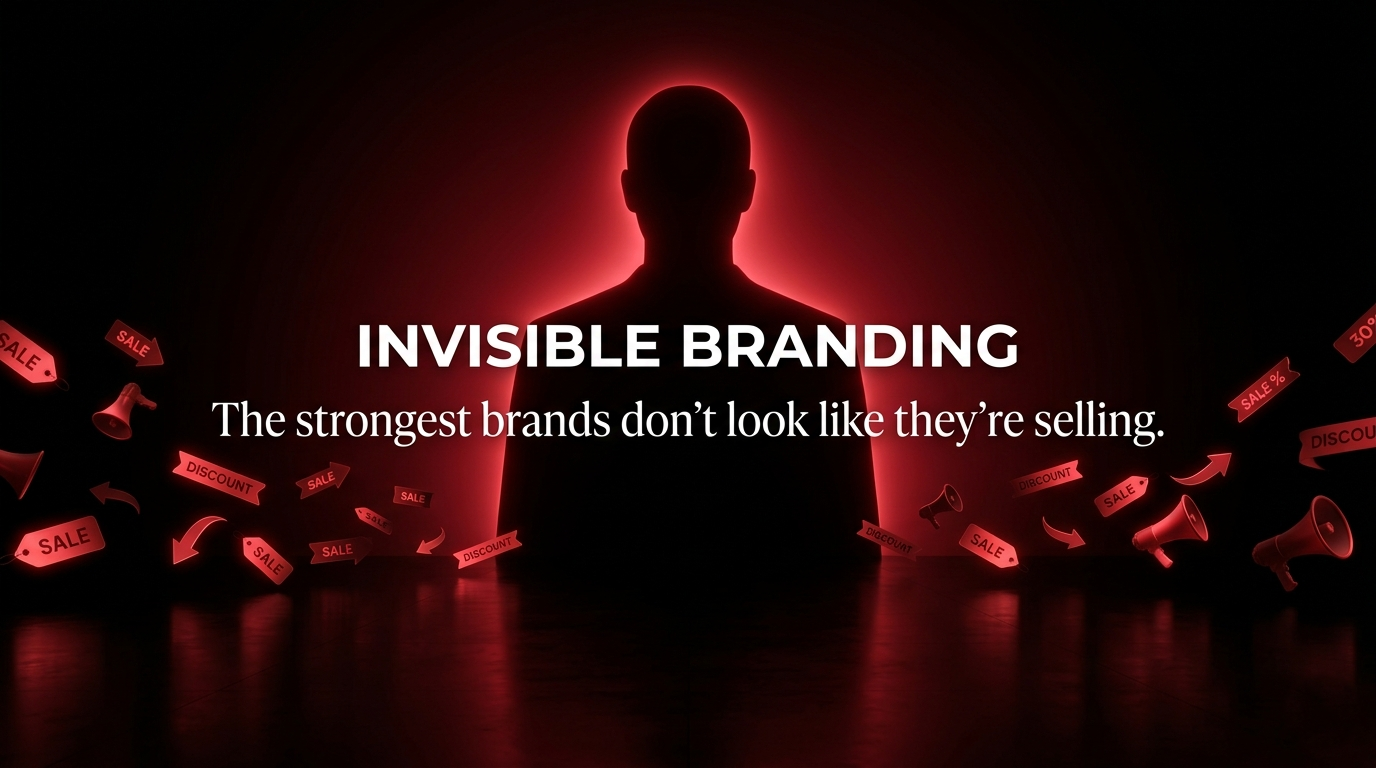
The strongest brands do not look like they are selling because their authority eliminates the need for visible persuasion.
At Webfolks, we help businesses build digital ecosystems that sell through trust, not through pressure.