A small shop owner once shared something interesting.
A customer walked in and said,
“I’ve been seeing your videos on Instagram for weeks.”
That single sentence explains modern marketing.
Today, people rarely discover brands by accident. They discover them through content. A social media post appears in their feed. A blog shows up on Google. A short video catches their attention while scrolling.
Before customers contact a business, they often observe the brand online first.
This shift has changed how businesses grow. Companies can no longer rely only on selling products or services. They must also become content creators.
In simple terms, businesses today must think like media companies.
The Shift: Businesses Are Becoming Media Brands
In the past, marketing mostly depended on traditional advertising. Businesses invested in billboards, newspaper ads, brochures, and TV promotions to reach customers.
Those channels pushed messages to people.
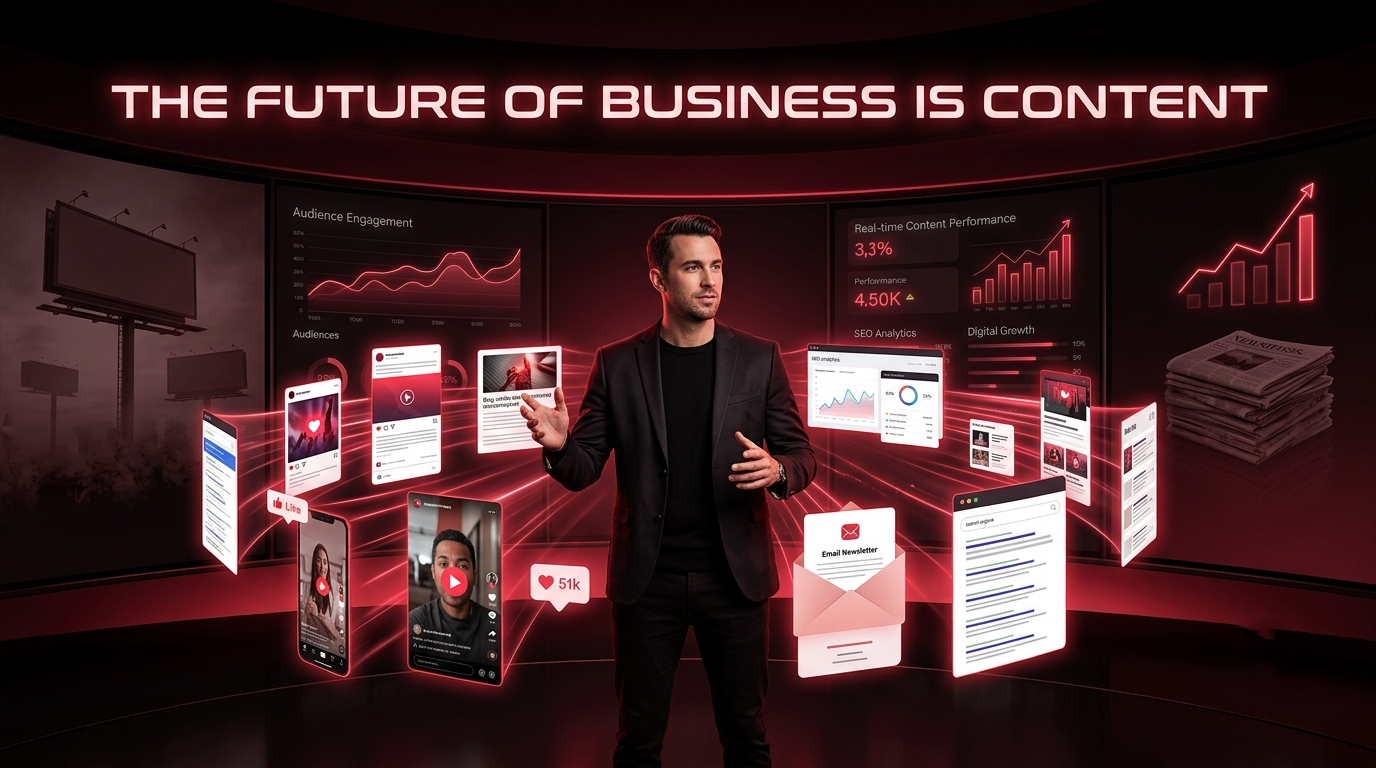
Today, digital platforms allow businesses to communicate directly with audiences. Instead of waiting for customers to find them, brands can publish content that attracts attention every day.
Businesses now operate like their own media channels by sharing content through:
- Social media platforms
- Blogs and articles
- Videos and reels
- Email newsletters
- Educational resources and guides
This shift has created what marketers call owned media. Instead of constantly paying for visibility, businesses build their own audience through consistent content.
Over time, this content becomes a powerful visibility engine that keeps the brand present in people’s minds.
What It Means to Think Like a Media Company
Thinking like a media company does not mean turning your business into a newsroom. It simply means creating content that informs, educates, or inspires your audience.
Instead of only promoting products, businesses start sharing knowledge and insights.
A media mindset includes:
- Sharing valuable information related to your industry
- Answering common customer questions
- Showing behind-the-scenes moments
- Educating audiences through tips and insights
- Building an audience before selling
When businesses consistently create useful content, they become trusted voices in their industry.
For example, a restaurant may share short videos showing how dishes are prepared. A fitness coach may post workout tips or health advice. A technology company may publish blogs explaining industry trends.
These efforts transform the business into something more than a service provider. It becomes a source of information that people follow and trust.
Why This Approach Drives Business Growth
A media mindset creates long-term value for businesses. Content allows brands to remain visible even when they are not actively running advertisements.
Several benefits make this strategy powerful.
Greater Brand Visibility
When businesses consistently publish content, they appear regularly in social media feeds and search results. Repeated exposure builds familiarity.
People tend to trust brands they recognize.
Stronger Customer Trust
Content helps businesses demonstrate expertise. Educational blogs, videos, and insights show that the brand understands its industry.
This builds credibility with potential customers.
Continuous Audience Engagement
Content keeps the relationship between brands and audiences active. Instead of appearing only when selling, businesses stay connected through helpful information.
Long-Term Lead Generation
A blog post written today can still generate inquiries months later. A helpful video may attract thousands of views over time.
Content continues working long after it is published.
Real Examples of Businesses Acting Like Media Brands
Many successful businesses are already applying this approach.
A café may post short reels showing latte art or customer experiences. These videos create curiosity and encourage people to visit the café.
A consulting firm might publish LinkedIn articles explaining industry challenges. Over time, decision-makers begin following the company for insights.
A local service provider may write blog articles answering common customer questions. When people search those questions on Google, they discover the business.
Retail brands also use storytelling content to show how their products fit into everyday life. This builds emotional connections with customers.
In all these cases, content becomes the discovery channel.
Customers first encounter the brand through information or entertainment. Later, they become buyers.
The Role of Digital Marketing in This Strategy
While content is the foundation, digital marketing helps businesses distribute and amplify that content effectively.
A strong digital strategy typically combines several key components.
Social Media Marketing
Platforms like Instagram, Facebook, and LinkedIn allow businesses to share stories, updates, and insights regularly.
Content Marketing
Blogs, guides, and educational posts attract audiences searching for answers.
Search Engine Optimization (SEO)
SEO ensures that content appears when people search for relevant topics on Google.
Video Marketing
Short videos and reels capture attention quickly and often generate high engagement.
When these strategies work together, businesses build consistent digital visibility. Instead of appearing occasionally, they become part of the daily digital landscape.
How Webfolks Helps Businesses Grow Online
Building a content-driven brand requires planning, creativity, and consistency. Many businesses struggle to manage all aspects of digital marketing on their own.
This is where Webfolks becomes a strategic partner.
Webfolks helps businesses turn digital platforms into growth channels through services such as:
- Social media management
- Content creation and storytelling
- SEO optimization
- Digital marketing strategy development
- Online advertising campaigns
- Brand visibility planning
The focus is not simply on posting content. The goal is to create a structured digital presence that attracts the right audience and generates meaningful engagement.
With the right strategy and consistent execution, businesses can transform their digital platforms into powerful marketing engines.
The Future Belongs to Content-Driven Brands
Customer behavior has changed dramatically. People now discover brands long before they contact them.
Customers today discover brands by scrolling through social media, searching on Google, watching videos, and reading blogs before making a decision.
During this journey, the brands that appear consistently gain attention and trust.
That is why successful businesses today think like media companies. They create content, educate audiences, and remain visible in the digital world.
If your business wants to grow online, a strong content strategy is no longer optional. It is a critical driver of visibility, trust, and customer engagement. Webfolks helps businesses build that digital presence.